Accident & Insurance
How to File an Insurance Claim After a Car Accident in California: 7 Steps
A step-by-step guide to the insurance claim process in California — including why your insurer cannot force its own shop on you, supplement claims, and avoiding common mistakes.
Filing an insurance claim in California doesn't have to be a fight. But knowing your rights — and the exact steps to follow — is the difference between a fair settlement and a lowball payout. Here's the complete 7-step process, including California-specific legal protections most drivers don't know about.
Before You File: What California Law Guarantees You
California has some of the strongest auto insurance consumer protections in the country. Know these rights before you speak to any adjuster:
- No forced network shop — California Insurance Code §758.5. Your insurer cannot legally require you to use its preferred shop, so your car can come to the shop you trust.
- Disclosure of non-OEM parts — Insurers must disclose in writing when aftermarket (non-OEM) parts are used. You may request OEM parts; if the insurer approves only aftermarket, you can pay the OEM upcharge yourself. Reputable shops will specify parts quality on every estimate.
- Right to timely response — Under California's Fair Claims Settlement Practices Regulations (10 Cal. Code Regs. §2695.7), insurers must acknowledge claims within 15 days and accept or deny within 40 days of receiving proof of loss.
- Right to a rental car — If the other driver was at fault, their liability insurance must provide a rental for the duration of your repair.
- Right to a supplement — Hidden damage found during repair must be paid by the insurer. This is not optional.
- Right to a diminished value claim — California courts have upheld this right in not-at-fault accidents.
The 7-Step California Insurance Claim Process
Step 1: Notify Your Insurance Company Immediately
Call your insurer within 24 hours of the accident — most policies require "prompt" notification and may deny coverage for delayed reporting. Provide: date, time, and location of the accident; description of what happened; other parties' names, insurance, and license plates; police report number if available.
What NOT to say: Don't speculate about fault, exaggerate or minimize injuries, or give recorded statements without understanding what you're agreeing to. You can politely decline a recorded statement until you've reviewed your policy or consulted an attorney for injury claims.
Step 2: Get Your Claim Number and Adjuster Assignment
Your insurer will assign a claim number and adjuster. Write down the adjuster's name, direct phone number, and email. All future communication should reference your claim number. The adjuster's job is to minimize the payout — be professional but firm about your rights.
If the other driver was at fault, you have two options: file with your own collision coverage (first-party claim) and let your insurer pursue subrogation — or file directly with the at-fault driver's insurer (third-party claim). Third-party avoids your deductible but can be slower.
Step 3: Get the Car to Leti Auto Works
This is where many LA drivers make a costly mistake: they accept the insurer's recommendation to use a "preferred" shop. You are not required to do this. Insurer-preferred shops are paid incentives to keep repair costs low, which often means cutting corners on parts quality or labor time.
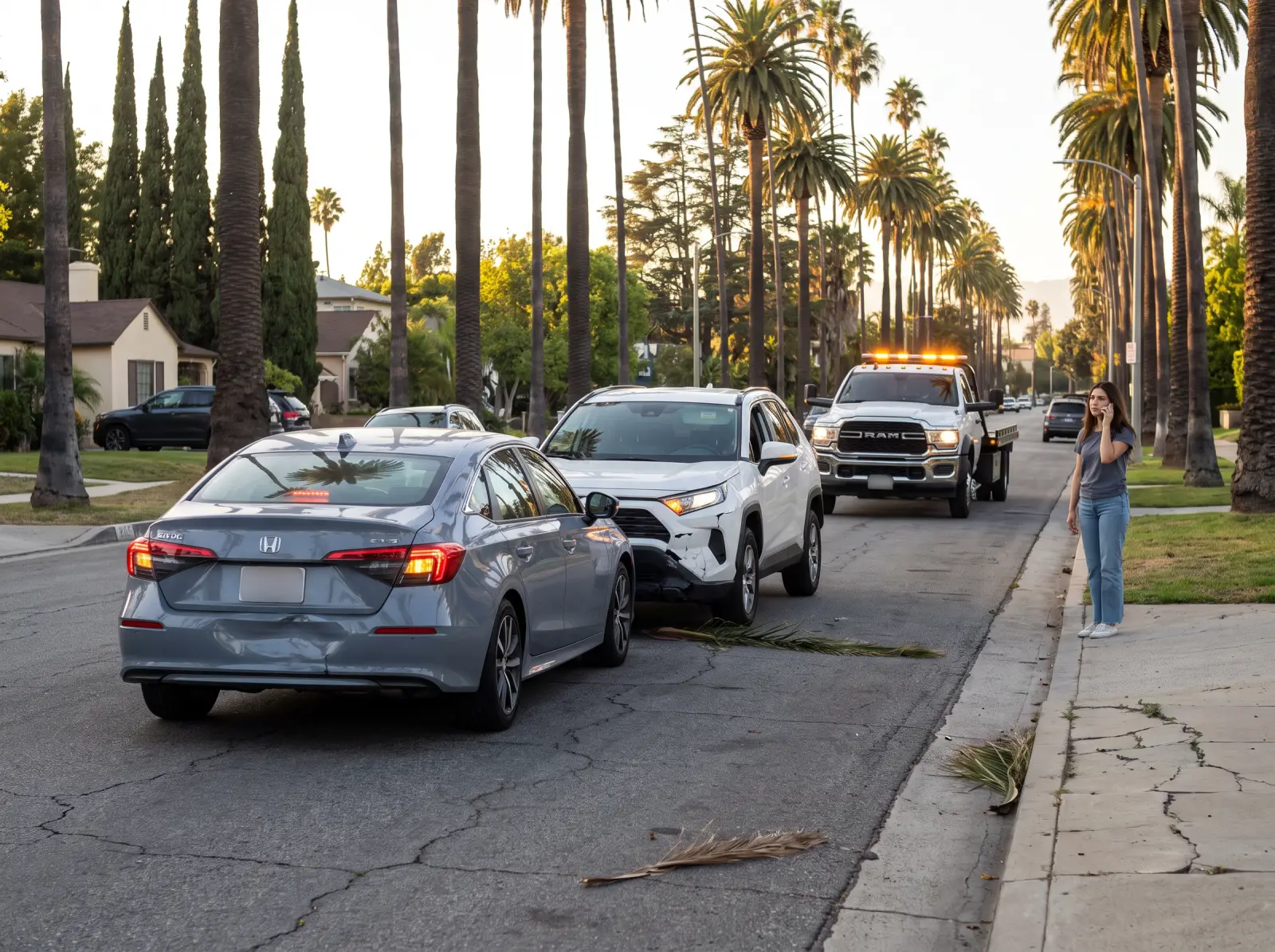
Call Leti Auto Works instead: our flatbed brings the car to our shop, and from there we do everything turnkey. We work with your insurer as your advocate, handle all communication with the adjuster and fight for the repair your car actually needs.
Step 4: The Adjuster's Inspection
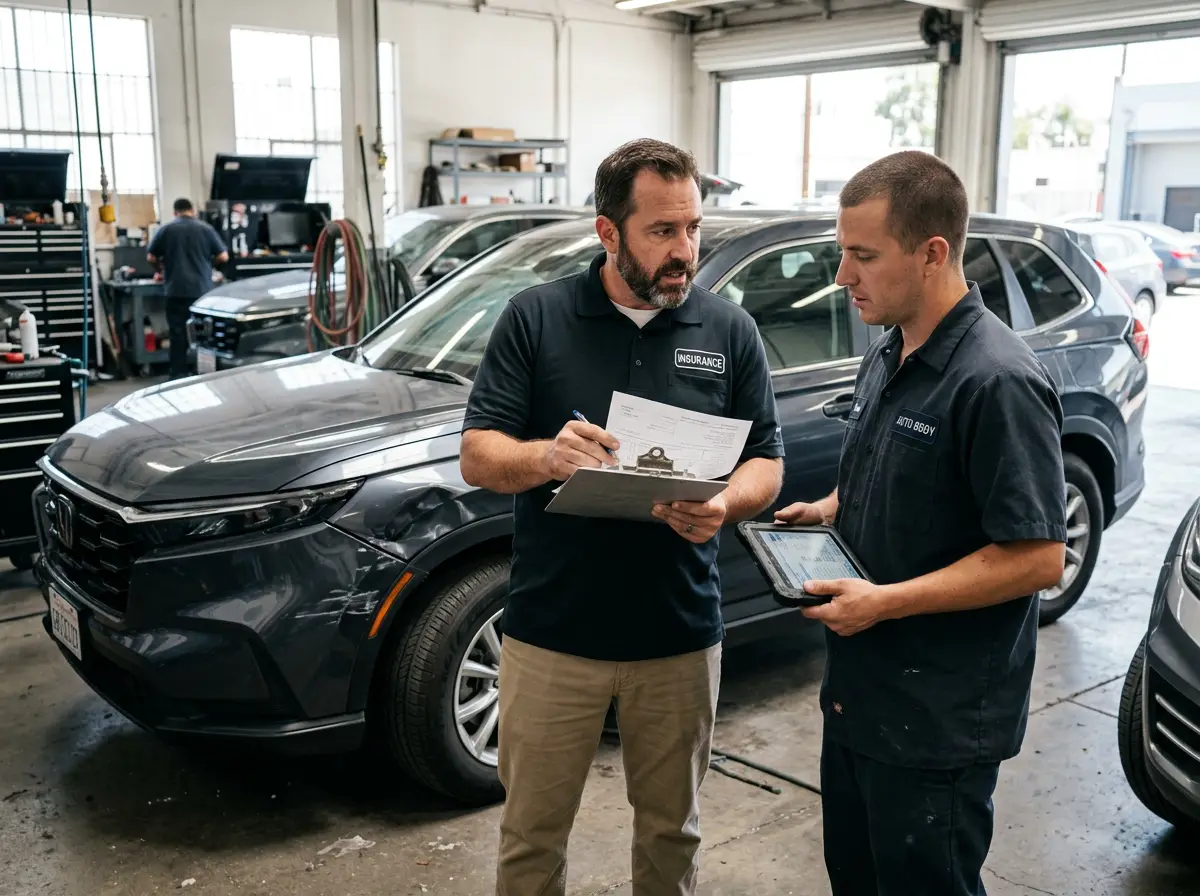
Your insurer will send an adjuster (or hire an independent appraisal company) to inspect the vehicle and generate a repair estimate. This can happen at the accident scene, at an insurer-run drive-in claims center, or — if your car is at our shop — we can manage the inspection directly.
The initial estimate is often incomplete. Adjusters assess visible damage; disassembly frequently reveals additional damage (bent frames, radiator damage, hidden wiring issues) that must be addressed through a supplement claim.
Step 5: Review the Estimate and Understand the Supplement Process
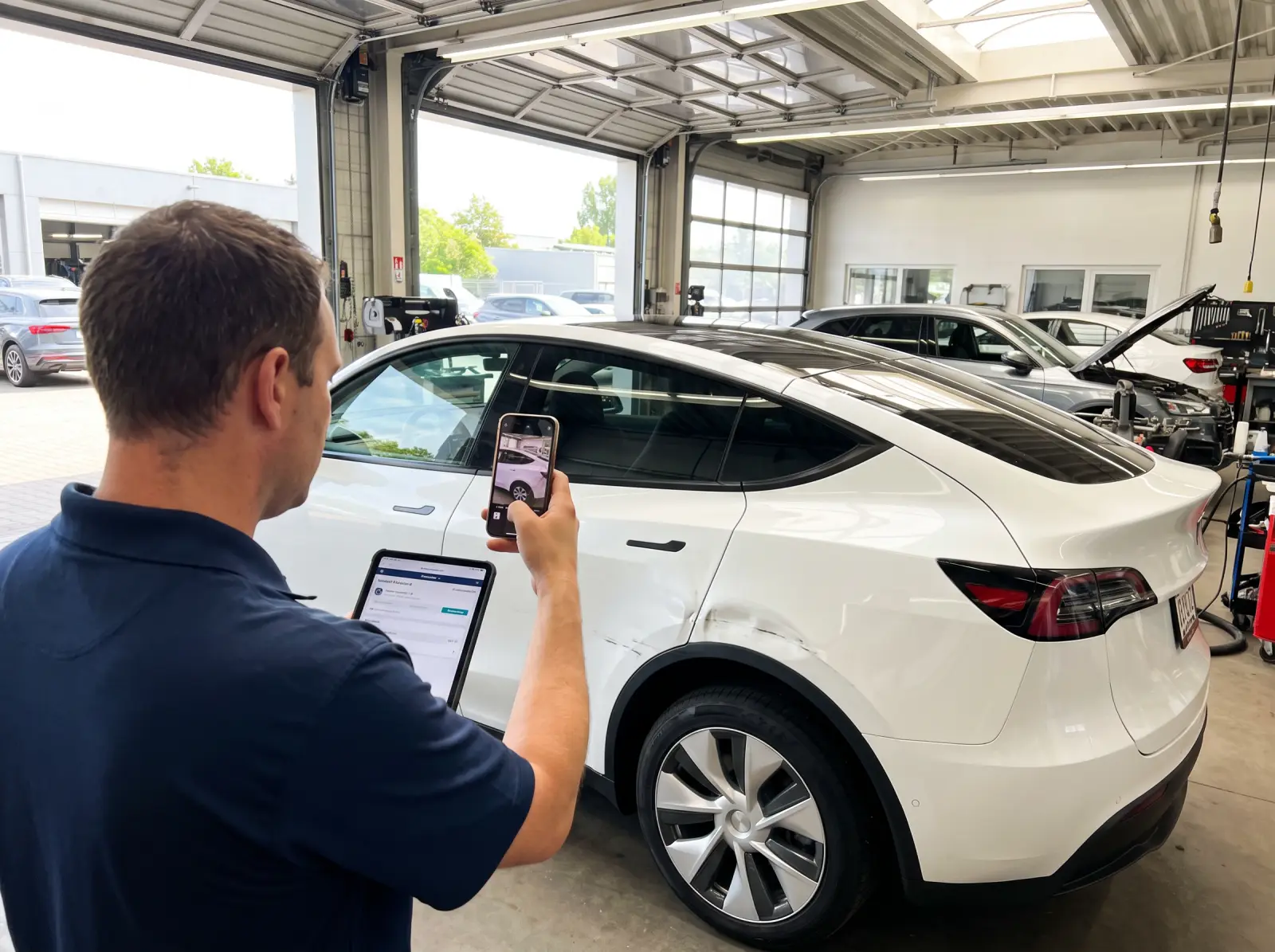
Once your shop receives the adjuster's estimate, they'll review it for accuracy. At Leti Auto Works, we compare the estimate line by line against what's actually needed. If additional damage is found during disassembly, we photograph it, document it thoroughly, and submit a supplement claim to your insurer.
Supplement claims are normal and expected. Insurers are required to pay for all accident-related damage. A supplement is not an unusual demand — it's a standard part of the collision repair process, especially for moderate-to-severe collisions.
Step 6: Approve Repairs and Arrange a Rental Car
Once the estimate is approved, sign the repair authorization. If you have rental coverage (or if the other party was at fault), we coordinate rental car pickup from our shop on the same day you drop off your vehicle. Most repairs take 3–10 business days; we provide a written timeline and updates throughout.
Step 7: File a Diminished Value Claim
After your repair is complete, if the other driver was at fault, file a diminished value claim with their liability insurer. Even a perfect repair leaves a record on your vehicle's CARFAX report, which reduces its resale value. California courts have upheld the right to diminished value compensation.
Diminished value claims typically range from $500 to $5,000+ depending on vehicle age, pre-accident condition, and repair extent. Learn more on our Insurance Claims page.
Common Mistakes That Cost California Drivers Money
- Using the insurer's preferred shop without questioning it — you lose your right to advocate for proper repairs
- Accepting the first settlement offer before repairs are complete — once you sign, the claim is closed even if more damage is found
- Missing the supplement window — hidden damage must be documented before the vehicle is reassembled
- Not filing a diminished value claim in not-at-fault accidents — this is money left on the table
- Delaying medical evaluation — if you have injuries, see a doctor within 24–48 hours, even if you feel OK