Accident & Insurance
What to Do After a Car Accident in Los Angeles: Complete Guide (2026)
Involved in a car accident in LA? Here are the 7 steps California law experts and collision specialists recommend — from calling 911 to protecting your insurance rights.
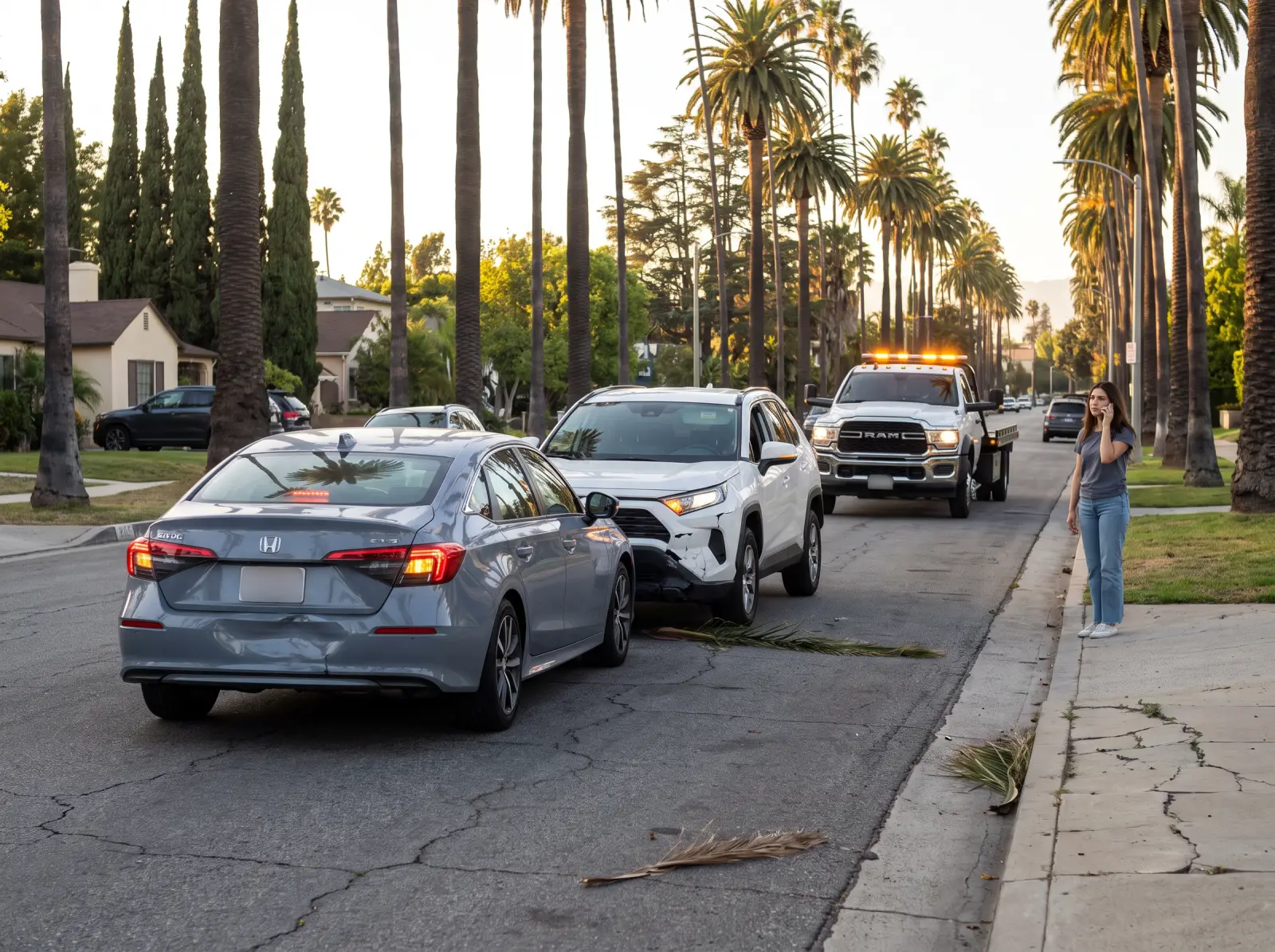
The first minute after a car accident matters most. LA drivers who know exactly what to do protect themselves legally, get fair insurance settlements, and avoid the costly mistakes that cost thousands of dollars down the road. This guide covers every step — from the accident scene to getting your car repaired.
The 7 Steps to Take After a Car Accident in Los Angeles
Step 1: Check for Injuries and Call 911
Before anything else — check yourself and all passengers for injuries. If anyone is hurt, call 911 immediately. Even if you feel fine, adrenaline can mask symptoms: whiplash, internal injuries, and concussions often don't appear for hours. If the accident is on a freeway like the 405 or 10, turn on your hazard lights. If you can get out safely, leave on the side away from traffic and wait behind the guard rail, not beside your car. If you can't get out safely, stay inside with your seatbelt fastened — standing in or near freeway lanes is the most dangerous place to be.
California law requires you to call law enforcement if anyone is injured. Even for property-damage-only accidents, a police report is valuable documentation that protects you in insurance disputes.
Step 2: Move to Safety
If your vehicle is drivable and the accident is minor, move it to the shoulder or a nearby parking lot to clear traffic. In Los Angeles, leaving a vehicle in a travel lane creates additional accident risk and you may be cited. Turn on hazard lights and, if available, place warning triangles or flares at least 100 feet behind the vehicle.
Step 3: Document Everything — Immediately
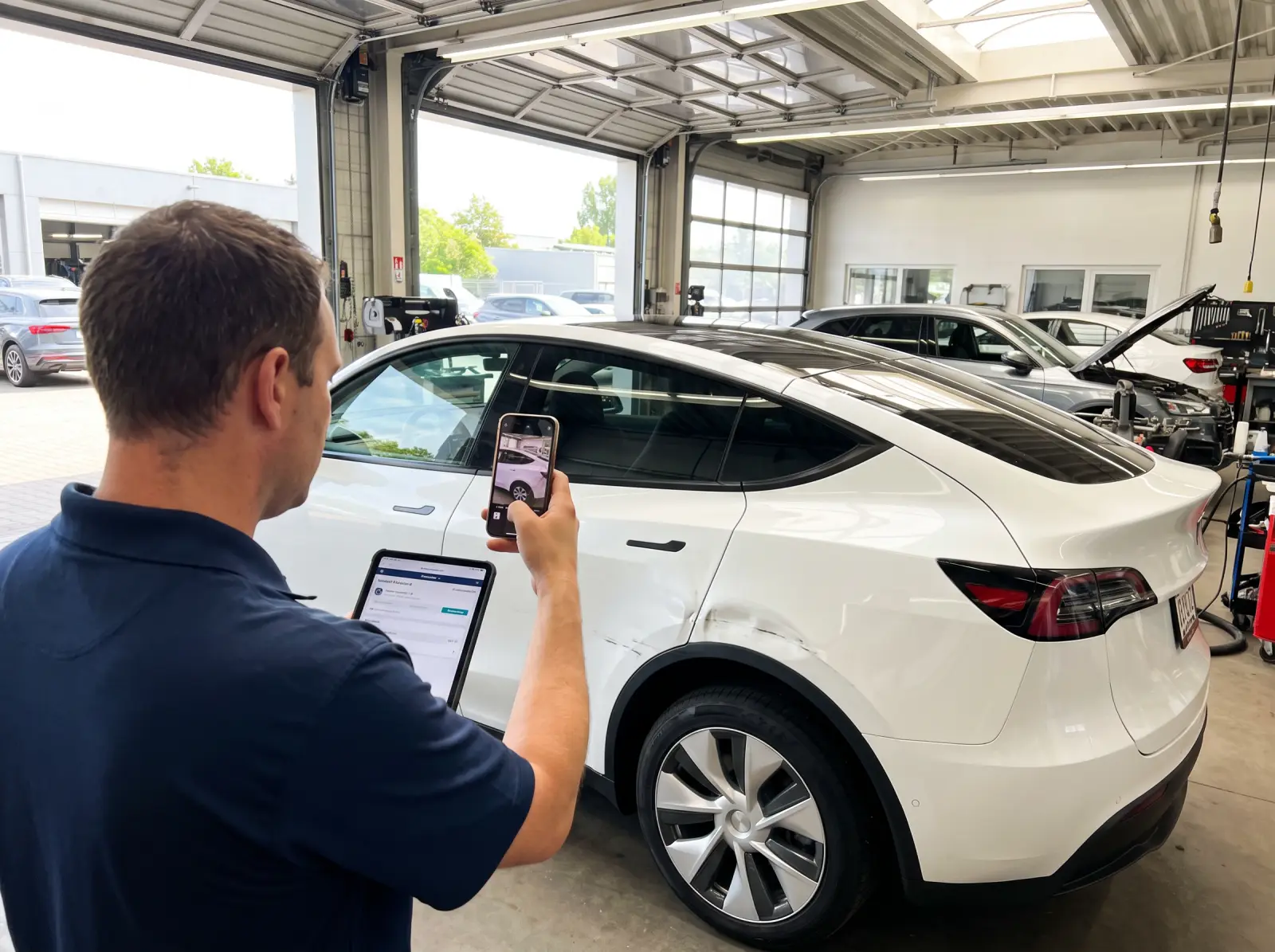
Pull out your phone and start photographing before anything moves. Capture:
- All vehicles from multiple angles, including wide shots showing positions
- All damage — yours and the other party's
- License plates of all vehicles involved
- The accident scene: road conditions, traffic signs, skid marks
- Any visible injuries
- Weather and lighting conditions
- The other driver's insurance card and driver's license (photograph them)
Photos taken immediately after the accident are the most powerful evidence you have. They document the scene before it changes, before weather affects skid marks, before anyone disputes positions.
Step 4: Exchange Information
You are required by California law to exchange the following with all other drivers:
- Full legal name and phone number
- Driver's license number and state
- Vehicle registration and license plate
- Insurance company name and policy number
- Vehicle make, model, and year
Also collect contact information from any witnesses. Witness statements are invaluable when fault is disputed, which happens frequently in LA accident scenarios.
Step 5: Do Not Admit Fault
This is critical: do not apologize, say "I didn't see you," or admit any responsibility at the scene. Even a sympathetic "I'm so sorry" can be interpreted as an admission of fault and used against you. Fault in California is determined by police reports, insurance investigations, and physical evidence — not by what you say at the scene. Provide factual statements only.
Step 6: Notify Your Insurance Company
Call your insurer as soon as you can — most policies require prompt notification. Provide the facts: date, time, location, other parties involved, and your claim number from police. Do not speculate about fault, injuries, or vehicle damage — you don't have complete information yet. Your insurer will assign an adjuster and guide the next steps.
If the accident was the other driver's fault, you can file with their insurer (third-party claim) or your own (first-party claim). Filing third-party avoids your deductible, but your insurer can advocate on your behalf if you file first-party.
Step 7: Arrange Towing and Collision Repair
If your vehicle isn't drivable — or isn't safe to drive — arrange towing immediately. Leti Auto Works tows your car free from the accident scene anywhere in Los Angeles when we do the collision repair. Call us at (213) 282-8201 and we dispatch a flatbed truck immediately.
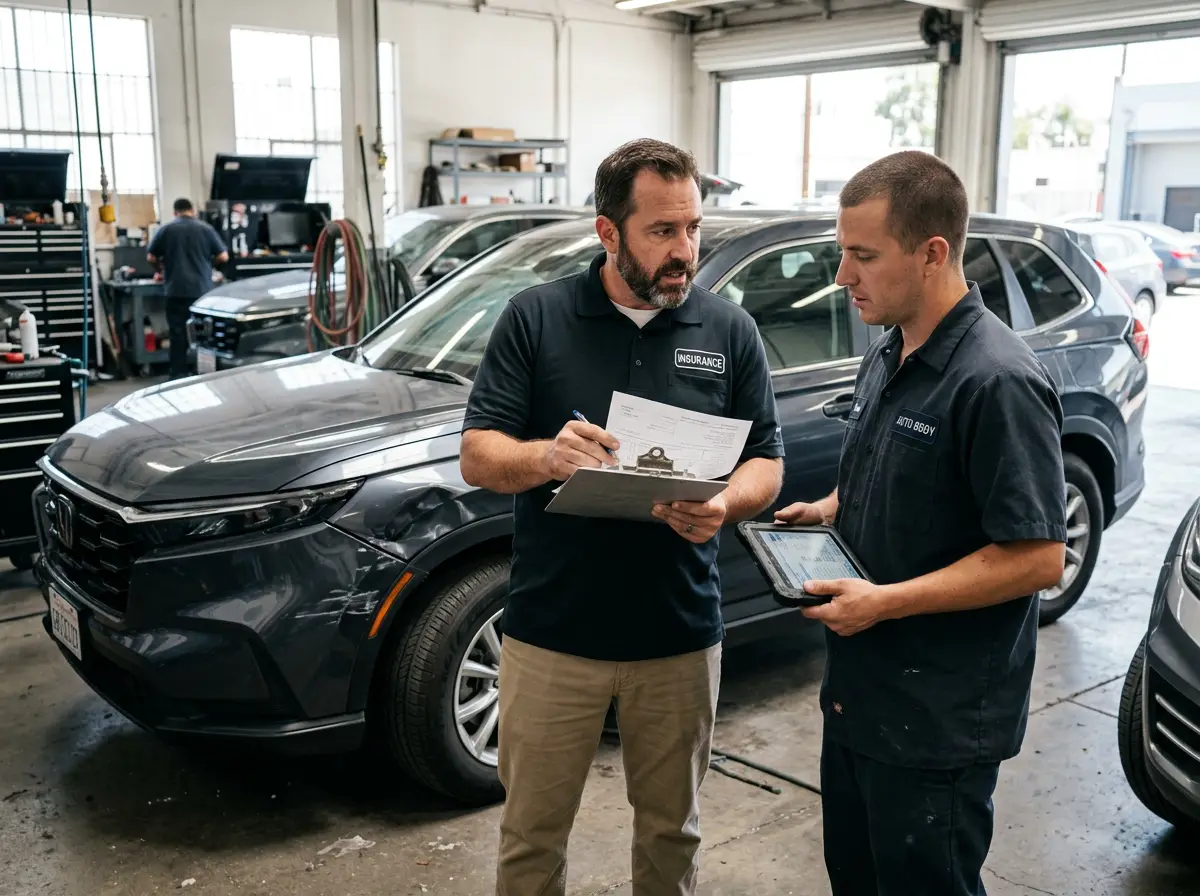
Remember: under California law, your insurer cannot force you to use its own network shop, so the car can come straight to us. We work directly with all major carriers and handle the claim process end-to-end, from the tow to the finished repair.
Your Rights Under California Law
California drivers have some of the strongest consumer protections in the country after an accident:
- No forced network shop — California Insurance Code §758.5: your insurer cannot require you to use its preferred shop, and steering payments to preferred shops are prohibited.
- Disclosure of non-OEM parts — Insurers must disclose in writing when aftermarket parts are used. You can request OEM parts; if approved only for aftermarket, you may pay the OEM upcharge yourself. Ask your repair shop to note parts quality on the estimate.
- Right to a rental car — If the other driver was at fault, their insurer must provide rental transportation. Your own policy may also include rental coverage.
- Right to a diminished value claim — You can seek compensation for the loss in market value your vehicle suffers even after perfect repairs.
- Right to supplement claims — If hidden damage is found during repairs, you're entitled to a supplement. We negotiate this directly with your adjuster.
How Leti Auto Works Helps After Your LA Accident
At Leti Auto Works, we help LA accident victims through the entire process — from towing to final payment:
- Free towing from anywhere in Los Angeles — 24/7, at no cost to collision repair clients
- Direct insurance billing — we work with all major carriers; you pay your deductible only
- Supplement negotiation — we fight for every dollar of hidden damage discovered during repair
- Rental car coordination — we arrange pickup from our shop the day you drop off
- Lifetime warranty on all collision repairs
Visit our Insurance Claims page to learn more about how we handle the claim process, or call us any time at (213) 282-8201.