Car Window Tinting in Los Angeles
Hot cabin, glare or no privacy? We install ceramic, carbon or dyed film in-house, in shades California law allows on each window.
- 794 Merchant St
- In-house
- drivers served
- 1,000+
- Google rating
- 4.9★
Window Tint
Why LA Drivers Tint Their Windows
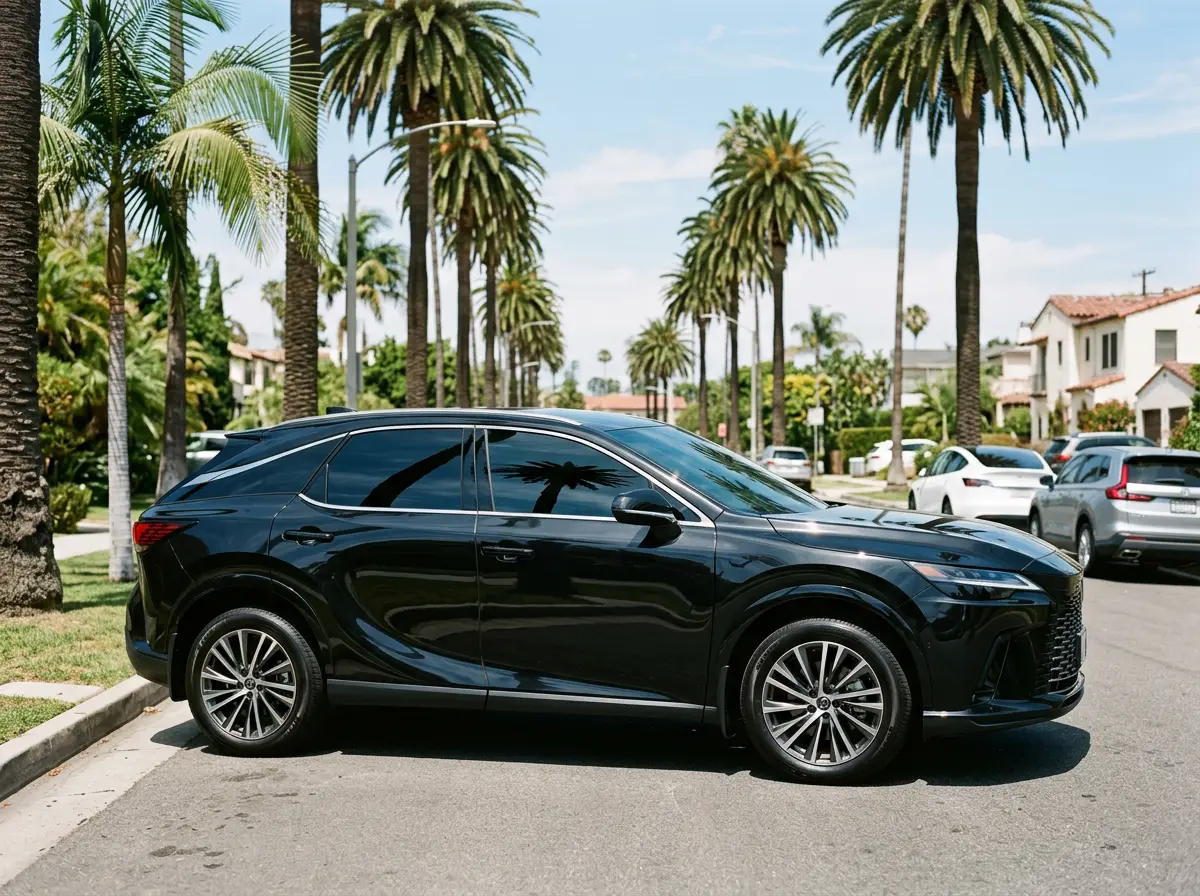
A car parked on a Downtown LA street in July can get hot enough inside that the steering wheel is hard to hold. Most of that heat comes in through the glass, and so does the UV light that fades dashboards and leather and reaches your arms and face on a long commute down the 10 or the 101.
Window film cuts that heat and UV, takes the edge off glare from a low sun and oncoming headlights, and keeps bags, laptops and anything else on the seat out of sight from people walking past. Better film does this without making the windows much darker, which matters because California limits how dark the front windows can be.
Heat:
less solar heat through the glass, so the cabin cools down faster and the A/C works less
UV:
protects your skin and slows fading and cracking of the dashboard, leather and trim
Glare:
easier driving into a low morning or evening sun on east–west streets
Privacy and security:
valuables on the back seat are harder to see from the sidewalk
California Window Tint Law (Vehicle Code §26708)
California is one of the stricter states for window tint, and the rules are different for each window. Vehicle Code §26708 and the federal glass standard it refers to set the limits below. We go over them with you before the job so you know exactly what is legal on your car.
Windshield:
only a non-reflective tint strip along the top 4 inches. No film on the rest of the windshield.
Front side windows (driver and front passenger):
the glass and film together must let in at least 70% of visible light. Factory glass already blocks some light, so only a very light, nearly clear film is legal here.
Rear side windows and rear window:
any darkness is allowed, as long as the car has outside mirrors on both sides.
Colors:
no red, amber or blue tint on the windshield or the front side windows.
Reflectivity:
film can't be more reflective than standard window glass, so mirror-finish films are out.
Medical exemption:
a driver or front-seat passenger with a medical condition that requires shading from the sun can carry a statement signed by a licensed physician (or an optometrist for a visual condition). It allows sun-screening on the front side windows, which can't be used after dark.
Dyed, Carbon and Ceramic Window Film
Window films look similar on the roll but work differently. The shade (how dark the glass looks) and the heat rejection (how much heat the film keeps out) are two separate things, and the type of film decides how much heat you block at a given shade.
For most LA drivers ceramic film is the best fit: it keeps the cabin cooler in the light shades that are legal on the front windows, and it blocks heat on the rear windows without having to go very dark. Bring the car in and we will go through the options for each window with you.
Dyed film:
the lowest-cost option. It darkens the glass and cuts glare, but rejects less heat than the other types and can fade or change color after years in strong sun.
Carbon film:
carbon particles block more heat than dyed film, give a matte, non-reflective look and hold their color well.
Ceramic film:
non-metallic ceramic particles block heat and UV even in light shades. With no metal in the film, it does not interfere with phone, GPS, radio or toll-tag signals.
Headlight and Taillight Tint
Smoked headlights and taillights are a popular customization, and we tint both. The rule is simple: the lights still have to do their job. Headlights must put out white light, and taillights, brake lights and turn signals must stay clearly visible in their required colors, so we stick to light shades that change the look without making the car unsafe or illegal on the road.
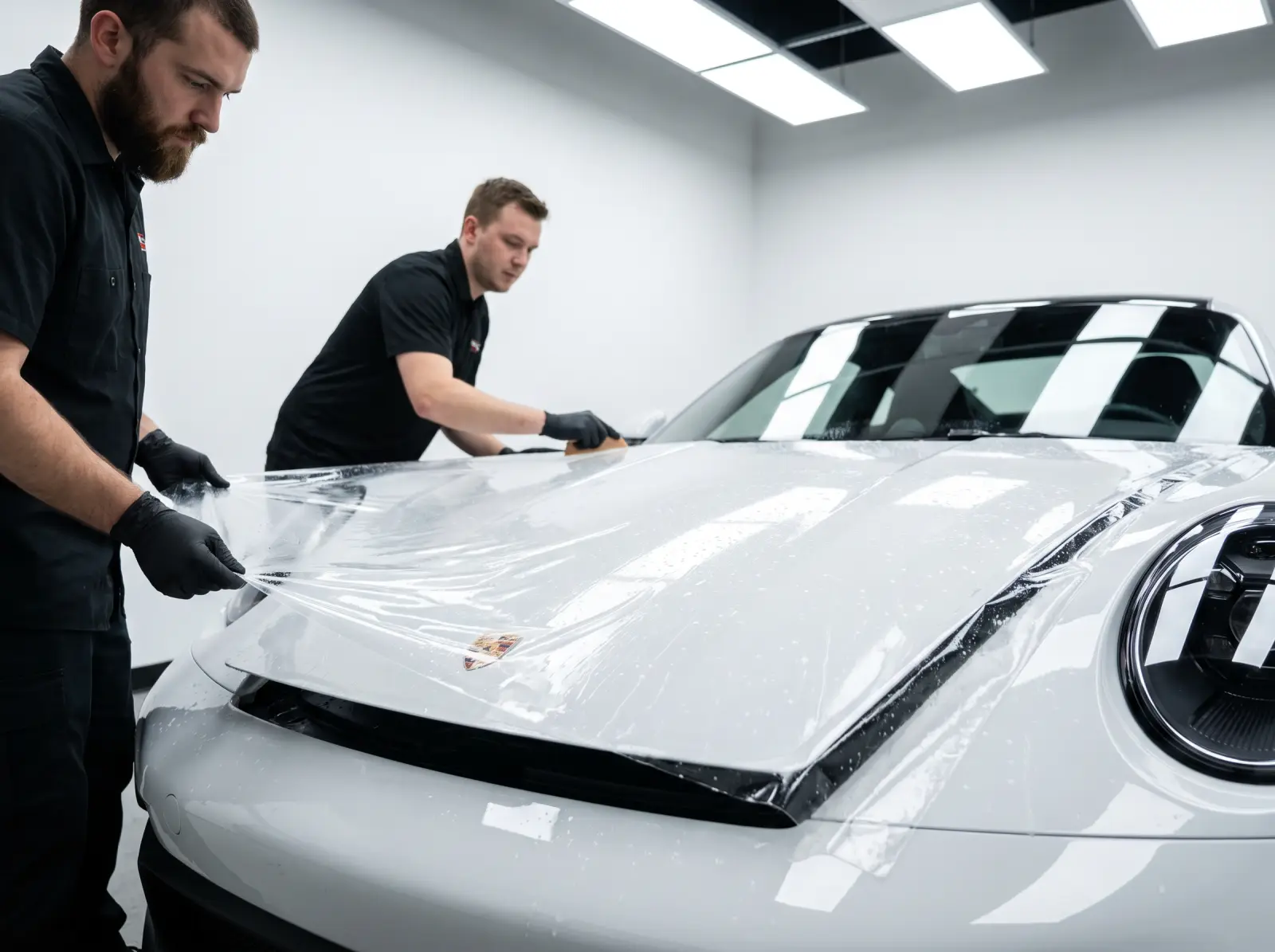
Very dark, blacked-out tint on lights can get you a ticket and makes the car harder for other drivers to see at night. If what you want is to protect the headlight lenses from rock chips, clear paint protection film does that without changing the light output.
Step by step
How a Window Tint Job Works at Our Shop
- 01
Choose the film type and shade for each window, with the California limits explained before anything is cut
- 02
Glass cleaned inside and out, with edges and seals cleared of dust and debris
- 03
Film cut to the exact shape of each window
- 04
Film heat-shrunk to fit curved glass such as the rear window
- 05
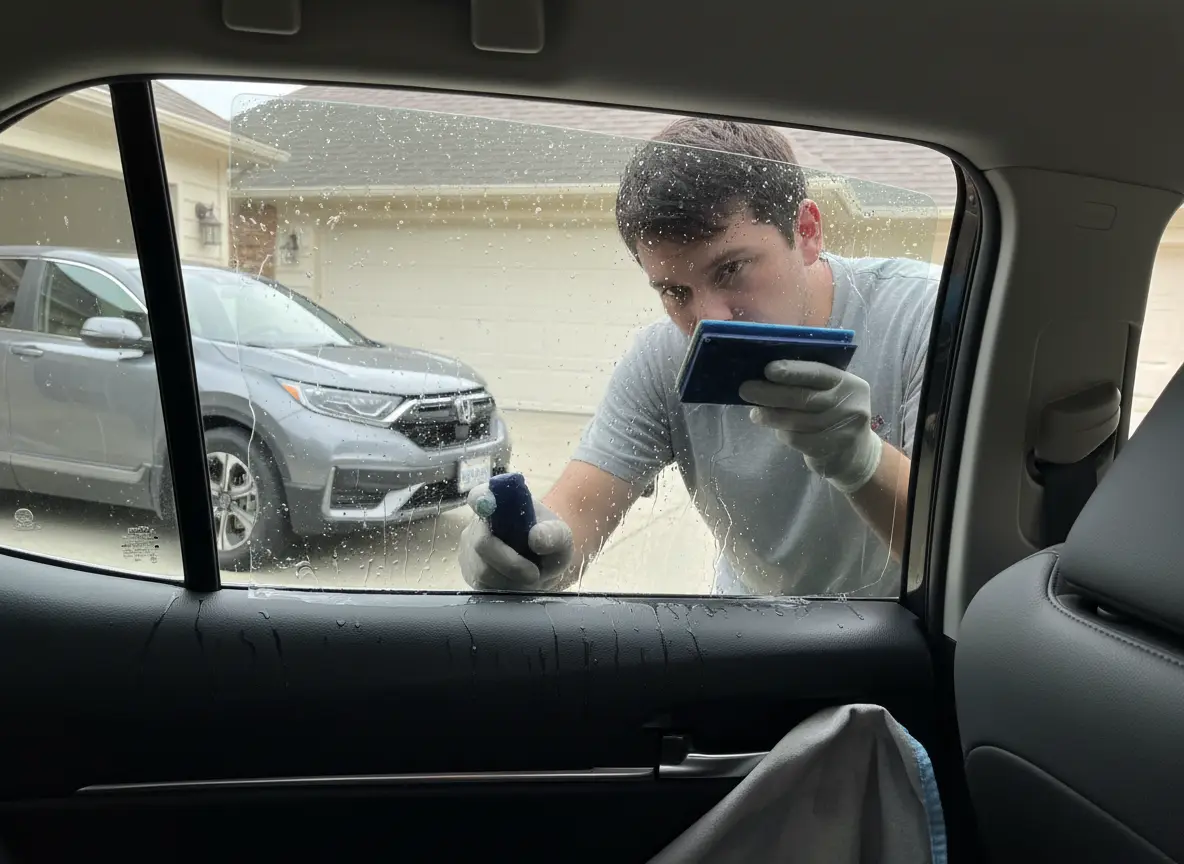
Film applied to the inside of the glass and squeegeed to push out water and air
- 06
Final check of edges and clarity, plus care instructions for the curing period
Tint After Collision Glass Replacement
When a side window or the rear glass breaks in an accident, the replacement glass arrives clear. A car with tinted windows then has one window that doesn't match, and whatever is on that seat is on display.
Because we do collision repair at the same shop, we can tint the new glass to match your other windows before the car goes back to you, with no separate trip to a tint shop. If your windows were tinted before the accident, tell us when we write the estimate. Whether the tint is covered by the claim depends on your policy and your adjuster.
Caring for New Window Tint
Film is applied to the inside of the glass with a water-based solution that needs time to dry out. For the first few days the windows may look slightly hazy or show small water pockets; that is normal and clears as the film cures. Keep the windows rolled up during that time so the edges don't lift.
- Wait a few days before rolling the windows down
- Clean the inside of the glass with a soft microfiber cloth and an ammonia-free glass cleaner
- Keep scrapers, razor blades and rough sponges away from tinted glass
- Rear defroster lines are safe: the film goes on over them and the defroster keeps working
Get a free estimate
Call or text (213) 282-8201, or send us the details online. Accident line and towing 24/7.
- Leti Auto Works
- 794 Merchant St, Los Angeles, CA 90021
- Arts District, Downtown Los Angeles
- Get directions
- Shop hours
- Monday – Friday10:00 AM – 8:00 PM
- Saturday10:00 AM – 1:00 PM
- SundayClosed
- Accident line and towing answer 24/7.
Window Tint — common questions
Didn’t find your question? Call us, a real person answers. 24/7 accident line & towing.
Call (213) 282-8201How dark can I tint my front windows in California?
Not very. Under Vehicle Code 26708 the front side windows must let in at least 70 percent of visible light with the glass and film combined, and factory glass already blocks some light, so only a very light film is legal there. The rear side windows and rear window can be any shade as long as the car has outside mirrors on both sides, and the windshield can only have a non-reflective strip along the top 4 inches.
Is ceramic window tint worth the extra cost?
For most Los Angeles drivers, yes. Ceramic film blocks more heat than dyed film at the same shade, which matters on the front windows where only a light film is legal. It also holds its color, and because it contains no metal it does not interfere with phone, GPS or radio signals.
Will window tint block my phone or GPS signal?
Ceramic, carbon and dyed films contain no metal and do not interfere with phone, GPS, radio or toll-tag signals. Signal problems come from metallized films, which use a thin metal layer to reflect heat.
How soon can I roll my windows down after tinting?
Keep the windows up for a few days while the film cures. Some haze or small water pockets in the first days are normal and clear on their own. We tell you the wait for your film when you pick up the car.
Can you tint a window that was replaced after an accident?
Yes. Replacement glass comes clear, so we tint it to match the rest of your windows. If your car is already in our shop for collision repair, the tint can be done before the car is returned. Whether the insurer pays for the tint depends on your policy and the adjuster.
Is headlight and taillight tint legal in California?
Only if the lights still work as required: headlights must give white light, and taillights, brake lights and turn signals must stay clearly visible in their proper colors. We use light shades for that reason. Dark, blacked-out tint on lights can lead to a ticket.
Leti Auto Works tints car windows at our shop at 794 Merchant St in the Arts District of Downtown Los Angeles. We install dyed, carbon and ceramic window film in-house, explain what California law allows on each window before we start, and tint headlights and taillights in road-legal shades. If a window was replaced after an accident, we tint the new glass to match the rest of the car.
Related services & guides
Car Customization & Starlight Headliners LA
Car customization in Los Angeles: starlight fiber-optic headliners, carbon fiber add-ons, custom interior trim and lighting upgrades, done in-house.
Collision Repair & Auto Body Shop in Los Angeles
Collision repair and auto body work in Los Angeles: dents, bumpers, paint matching, frame straightening, insurance claims handled, free 24/7 accident towing.
Paint Protection Film (PPF) Los Angeles
XPEL certified paint protection film installation in Los Angeles. Self-healing film with a 10-year warranty. Full-body, front-end and partial coverage.
Car Wrap & Vinyl Wrap Los Angeles
Car wraps and vinyl wraps in Los Angeles with 3M and Avery Dennison films. Color change, matte, satin, gloss and chrome finishes. Full and partial wraps.
Ceramic Coating in Los Angeles
Ceramic coating in Los Angeles with paint correction first. Ceramic Package $1,200–$1,800 with a 5–7 year coating warranty. In-house in the Arts District, DTLA.